
Criminal Defense
Since 1993
Since 1993



By: John Guidry
Technology is making us paranoid. And remember, just because you’re paranoid doesn’t mean they aren’t chasing you. We have good reason to be worried. The government can track your car with GPS. They can tap your cell phone. And there are probably a hundred other things they are doing but not telling us.
Today’s Lesson: Watch what you say. Or, for those who require more direct language: Shut the bleep up when you are around cops. Why anyone would start blabbing incriminating stuff while sitting in a marked patrol unit is beyond my comprehension. Yet, “Big Brother” relies on your lack of street smarts to get a conviction.
Did the police record you without your knowledge while you were in custody?
Silence is your best defense. Call John today at (407) 423-1117.
The case is Bowens v. State, 80 So. 3d 1087 (Fla. 4th DCA 2012).
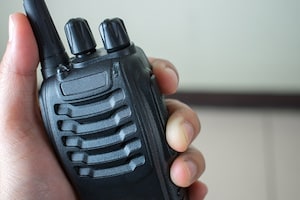
The Trap: Point of fact: EVERY POLICE CAR HAS A RECORDING DEVICE IN THE BACK SEAT. Bowens and Michaels didn’t realize this. They began saying incriminating things to each other, discussing the robbery. The State played this tape for the jury.
Bowens appealed his conviction, arguing that playing the tape violated his Constitutional rights.
The Ruling: The Court upheld the conviction and allowed the tapes.
Note: In 2012, they used a hidden tape recorder. In 2026, the car itself is listening.
1. High-Definition Audio & “Whisper Mode” In 2026, police vehicles are equipped with isolated microphone arrays.
2. AI Transcription & Sentiment Analysis The State no longer has to pay a secretary to type out the tapes.
3. Body Cams Never Sleep It isn’t just the car.
There is no “Cone of Silence” in the back of a police car. Whether it is 2012 or 2026, the rule remains the same: Say Nothing. If you are innocent, wait for your lawyer. If you are guilty, definitely wait for your lawyer.
Call me at (407) 423-1117. Let’s do the talking in court.
About John Guidry II
John Guidry II is a seasoned criminal defense attorney and founder of the Law Firm of John P. Guidry II, P.A., located in downtown Orlando next to the Orange County Courthouse, where he has practiced for over 30 years. With more than three decades of experience defending clients throughout Central Florida since 1993, Guidry has successfully defended thousands of cases in Orange, Seminole, Osceola, Brevard, Lake, and Volusia counties. He has built a reputation for his strategic approach to criminal defense, focusing on pretrial motions and case dismissals rather than jury trials.
Guidry earned both his Juris Doctorate and Master of Business Administration from St. Louis University in 1993. He is a member of the Florida Bar and the Florida Association of Criminal Defense Lawyers. His practice encompasses the full spectrum of Florida state criminal charges, with a particular emphasis on achieving favorable outcomes through thorough pretrial preparation and motion practice.
Beyond the courtroom, Guidry is a prolific legal educator who has authored over 400 articles on criminal defense topics. He shares his legal expertise through his popular YouTube channel, Instagram, and TikTok accounts, where he has built a substantial following of people eager to learn about the law. His educational content breaks down complex legal concepts into accessible information for the general public.
When not practicing law, Guidry enjoys tennis and pickleball, and loves to travel. Drawing from his background as a former recording studio owner and music video producer in the Orlando area, he brings a creative perspective to his legal practice and continues to apply his passion for video production to his educational content.