
Criminal Defense
Since 1993
Since 1993




By: John Guidry
It’s time for me to stroke you, dear reader.
Congratulations for exposing yourself to important justice issues—issues that corporate news networks either do not have the time, or intelligence, to report. If you need further stroking, simply donate to any popular Hollywood cause. The accompanying “gala” will involve an orgy of famous folks telling each other how important they are.
But the view from the back of a limo is rarely accurate. The view from the defendant’s table is much clearer.
There has been a long-standing battle between those in favor of Justice (getting the right result) and those in favor of Procedure (following the rules). To understand this fight, we’ll use the real-life case of Woodbury v. State, 730 So. 2d 354 (Fla. 5th DCA 1999).
Did you lose an appeal because your trial lawyer didn’t “preserve” the issue?
The fight isn’t over. Call John today at (407) 423-1117.
Woodbury was convicted of a felony drug offense.
The Result: The Appellate Court acknowledged that the search was likely unconstitutional. However, they upheld the conviction anyway.
Why? Because the appeals court ruled that the specific issue was not “preserved.” They complained that the lawyer’s motion was a “bare-bones” pleading that failed to clearly articulate the right reason.
Translation: Woodbury stayed a convicted felon not because he was guilty, but because his lawyer didn’t write the motion correctly.
I rarely single out judges for praise, but 5th District Court of Appeal Judge Charles Harris (now retired) was a rare breed. He understood that the Constitution is more important than filing deadlines or formatting errors.
In Woodbury, Judge Harris wrote a brilliant, angry dissent:
“Woodbury is serving a sentence based on a wrongful conviction while we argue the style points of his attorney. We, like Nero who fiddled while Rome burned, seem insensitive to the truly important happening going on around us; the trampling of the Fourth Amendment.”
He argued that if the Court sees a wrongful conviction, they should fix it, regardless of whether the lawyer made the perfect argument below.
Judge Harris continued his crusade in Hugh v. State, 751 So. 2d 718 (Fla. 5th DCA 2000). Once again, the State argued that a defendant shouldn’t be heard because the “proper argument” wasn’t made at trial.
Harris retorted with wisdom that breaks down the absurdity of the system:
“The court’s primary responsibility, in any appeal, is to the truth… I submit it is a denial of due process if the appellate court can see from the record that a wrongful conviction has occurred but does nothing about it because some magic words were not uttered below.”
And there you have it. In Florida, if your attorney doesn’t utter the “magic words” to the trial judge, the appellate court will often let a wrongful conviction stand.
Note: While Judge Harris’s view was morally right, the “Preservation Rule” is still the law in 2026.
1. The Remedy: Rule 3.850 (Ineffective Assistance) If you lose your direct appeal because your lawyer failed to argue the “magic words” (like in Woodbury), we don’t give up.
2. “Fundamental Error” There is one exception to the “Magic Words” rule. If an error is so bad that it goes to the foundation of the case (like being convicted of a crime that doesn’t exist), we can argue Fundamental Error.
3. Body Cams & Transcripts In 2026, we have video of almost everything. It is much easier for us to review the record and find exactly where the first lawyer messed up. We use the transcripts to prove that the “magic words” were missing, which actually helps us win the Ineffective Assistance claim later.
If your previous attorney filed a “bare bones” motion and missed the key issue, we need to review your file immediately. You have strict time limits to file a claim for Ineffective Assistance.
Call me at (407) 423-1117. Let’s find the arguments they missed.
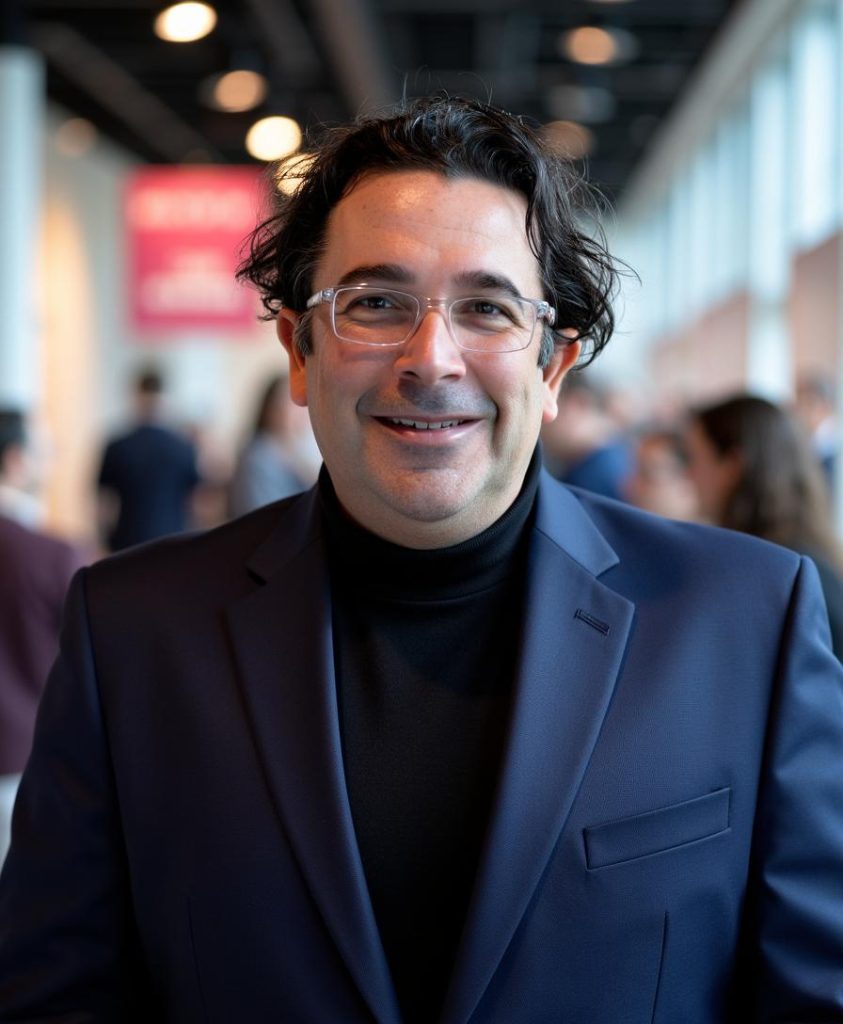
About John Guidry II
John Guidry II is a seasoned criminal defense attorney and founder of the Law Firm of John P. Guidry II, P.A., located in downtown Orlando next to the Orange County Courthouse, where he has practiced for over 30 years. With more than three decades of experience defending clients throughout Central Florida since 1993, Guidry has successfully defended thousands of cases in Orange, Seminole, Osceola, Brevard, Lake, and Volusia counties. He has built a reputation for his strategic approach to criminal defense, focusing on pretrial motions and case dismissals rather than jury trials.
Guidry earned both his Juris Doctorate and Master of Business Administration from St. Louis University in 1993. He is a member of the Florida Bar and the Florida Association of Criminal Defense Lawyers. His practice encompasses the full spectrum of Florida state criminal charges, with a particular emphasis on achieving favorable outcomes through thorough pretrial preparation and motion practice.
Beyond the courtroom, Guidry is a prolific legal educator who has authored over 400 articles on criminal defense topics. He shares his legal expertise through his popular YouTube channel, Instagram, and TikTok accounts, where he has built a substantial following of people eager to learn about the law. His educational content breaks down complex legal concepts into accessible information for the general public.
When not practicing law, Guidry enjoys tennis and pickleball, and loves to travel. Drawing from his background as a former recording studio owner and music video producer in the Orlando area, he brings a creative perspective to his legal practice and continues to apply his passion for video production to his educational content.