
Can the Government Ban You from a Public Park in Orlando?
By: John Guidry
Ever notice that certain things in life are simply “wrong” if done to a civilian, but “criminal” if done to the government? Take the payment of debts. If you fail to pay your power bill, you “owe” the money, but it’s not a crime. If you miss a payment on your car, the bank might show up to take the keys back, but you aren’t going to jail.
But if you owe the government? Failing to pay those taxes can be a one-way ticket to a cell. It’s an insane double standard. In some countries, like Switzerland, failing to pay your taxes isn’t even a crime—sure, they’ll seize everything down to your toothbrush, but they won’t put you in a cage for it.
The same logic applies to following “commands.” Fail to obey your boss, and you get fired. Fail to obey your doctor, and you stay sick. But fail to obey a government official? Now we’re talking about a criminal record.
This brings us to a kid named K.J. and a “typical script” of police overreach in a public park.
Were you trespassed from a public park or government building in Orlando? If the original warning wasn’t justified, the arrest shouldn’t stand. Call John at (407) 423-1117 today.
The Case of K.J. vs. The State
The case of K.J. v. State of Florida, 107 So. 3d 523 (Fla. 4th DCA 2013), started with something as simple as hanging out in a city park. K.J. wasn’t doing anything illegal—he was just there after sunset when the park was technically closed.
Think about that. If you’re in a Best Buy at 9:05 p.m., they just ask you to bring your items to the front. No crime, right? But here, the officer approached K.J., who got spooked and ran off. When the officer caught him, he didn’t just give him a ticket or a warning for the night. He told K.J. to “stay out of the park” and “don’t come back.”
The very next afternoon, while the park was wide open to the public, that same officer saw K.J. back in the park and arrested him for trespass.
Why the Conviction was Thrown Out
K.J.’s defense attorney moved to dismiss the charge, but the trial judge (who apparently thought the officer was the “King of the Park”) denied it. On appeal, however, the court saw the “blabbing” for what it was.
The appellate court threw out the conviction, holding that the officer had no justification to ban K.J. from the park during its normal, open hours just because he was there once after closing. Because the original “don’t come back” command wasn’t legally justified, the subsequent arrest was a total failure of proof.
The 2025 Update: The Public Sleeping Law
As of January 1, 2025, the stakes for being in public spaces have changed in Florida. A new state law (F.S. 125.0231) now allows citizens and businesses to sue local governments if they don’t enforce bans on public sleeping and camping.
This means police in Orange and Seminole County are under more pressure than ever to clear people out of parks and sidewalks. We are seeing a surge in “trespass warnings” being used as a tool to move the homeless or “suspicious” people along. But just like in K.J.’s case, a badge doesn’t give an officer the right to ban you from public land forever without a valid, legal reason.
John’s Takeaways
- Public Property is Different: You have a much higher right to be in a public park during open hours than you do on private property.
- The Warning Must Be Valid: If the initial “trespass warning” was issued while you were doing something legal, or if the officer overstepped their authority, any future arrest for returning is a “sad but true” mistake by the State.
- “Stay Out” Isn’t Always Legal: An officer cannot simply ban a citizen from a public space indefinitely because they were annoyed by them once.
- Don’t Run, But Don’t “Blab”: If an officer gives you a command, stay calm. But if they start asking questions, remember the Golden Rule: Shut up. Anything you say can be used to justify their “founded suspicion.”
- Regional Reality: Whether you’re in Orlando, Sanford, or Kissimmee, the rules for public parks remain the same: the government needs a real reason to keep you out.
The justice system is harsh, and it is a colossal waste of taxpayer dollars to arrest kids for being in a park. I’ve been defending the citizens of Central Florida since 1993, and I’ve seen plenty of “bossy” commands shut down by the courts.
Trespassed from a public space? Call John at (407) 423-1117.
About John Guidry II
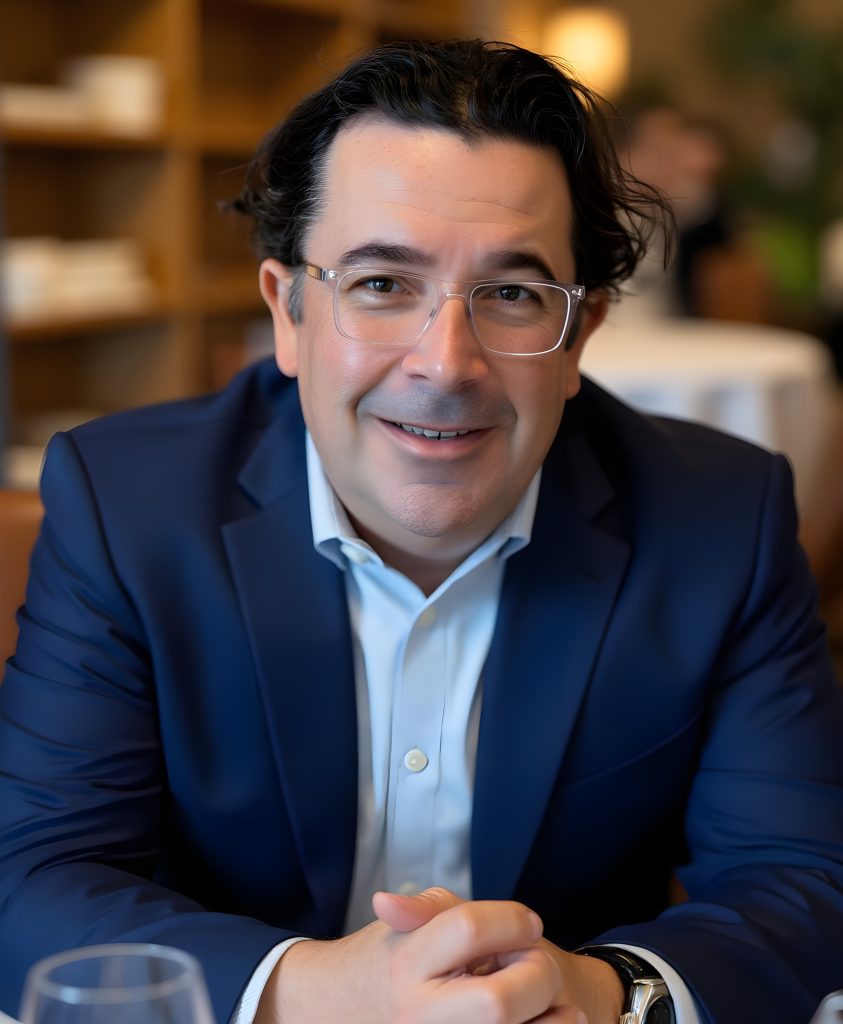
John Guidry II is a seasoned criminal defense attorney and founder of the Law Firm of John P. Guidry II, P.A., located in downtown Orlando next to the Orange County Courthouse, where he has practiced for over 30 years. With more than three decades of experience defending clients throughout Central Florida since 1993, Guidry has successfully defended thousands of cases in Orange, Seminole, Osceola, Brevard, Lake, and Volusia counties. He has built a reputation for his strategic approach to criminal defense, focusing on pretrial motions and case dismissals rather than jury trials.
Guidry earned both his Juris Doctorate and Master of Business Administration from St. Louis University in 1993. He is a member of the Florida Bar and the Florida Association of Criminal Defense Lawyers. His practice encompasses the full spectrum of Florida state criminal charges, with a particular emphasis on achieving favorable outcomes through thorough pretrial preparation and motion practice.
Beyond the courtroom, Guidry is a prolific legal educator who has authored over 400 articles on criminal defense topics. He shares his legal expertise through his popular YouTube channel, Instagram, and TikTok accounts, where he has built a substantial following of people eager to learn about the law. His educational content breaks down complex legal concepts into accessible information for the general public.
When not practicing law, Guidry enjoys tennis and pickleball, and loves to travel. Drawing from his background as a former recording studio owner and music video producer in the Orlando area, he brings a creative perspective to his legal practice and continues to apply his passion for video production to his educational content.