
Criminal Defense
Since 1993
Since 1993



By: John Guidry
Criminal cases almost always involve arguments over “facts.” Should a certain fact go to a jury? That depends on who is talking. Can an officer testify that a pill labeled “Watson 853” is hydrocodone? Can a lab analyst or a pharmacist do better? These questions of “known” versus “unknown” facts get complicated when we look at the Fourth Amendment and the “curtilage” of your home.
In the world of science, we have known facts (the Earth orbits the Sun) and unknown facts (is there life on the Sun?). But in mathematics, Kurt Gödel introduced a third category: the “unknowable” fact. He proved that in any logical system, there are things that are true but can never be proven. When it comes to the police and drug dogs, the State often tries to treat a “dog alert” as a known fact, when in reality, it’s often an unconstitutional “unknowable” that shouldn’t be in court at all.
For years, police in Florida used a “cheat code.” They would bring a K-9 named Franky up to a front door, let him sniff the air, and use his “alert” as the sole basis for a search warrant. This wasn’t just a hypothetical—it was the standard script until the U.S. Supreme Court weighed in.
Was your search warrant based on a dog sniff at your front door? In 2025, that “alert” is more legally fragile than ever. Call John Guidry today at (407) 423-1117 to discuss your Fourth Amendment defense.
The case of Florida v. Jardines, 569 U.S. 1 (2013), changed the landscape of privacy. Miami police received a tip about a grow house and brought a drug dog to the front porch. The dog alerted, a warrant was issued, and marijuana was found.
The Supreme Court threw out the evidence for two profound reasons:
As we move through 2025, the Jardines logic has combined with the legalization of hemp and medical marijuana to create a nightmare for prosecutors. In the recent local case of Ford v. State (Fla. 5th DCA 2025), the court ruled that a drug dog’s alert alone is no longer enough to provide probable cause for a search.
Why? Because in 2025, a dog cannot distinguish between illegal “street” weed and legal medical marijuana or hemp. As Chief Judge James Edwards wrote, “Is that sniff up to snuff? Going forward, that dog won’t hunt.” If the dog is alerting to a substance that could be perfectly legal, the alert is no longer a “known fact” of criminal activity—it’s an ambiguous “unknowable.”
The justice system is harsh, and it’s “sad but true” that police will use every high-tech (or high-nose) tool they have to peer inside your life. Whether you’re in Orange, Seminole, Osceola, Lake, Brevard, or Volusia County, your home is your castle. If the police used a dog to “peek” through your walls, they overstepped.
I’ve been defending the Fourth Amendment rights of Central Florida residents since 1993. If your case started with a K-9 on your porch, let’s see if we can get that evidence tossed out of court.
Facing these charges? Call John at (407) 423-1117.
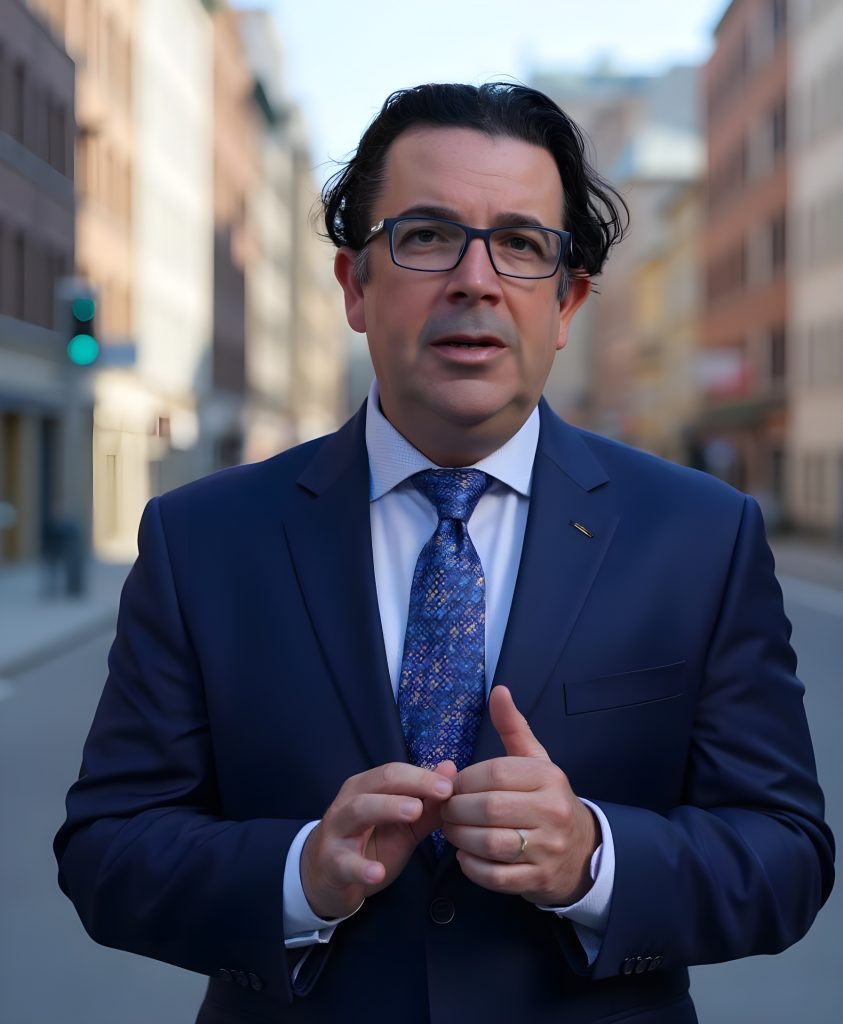
About John Guidry II
John Guidry II is a seasoned criminal defense attorney and founder of the Law Firm of John P. Guidry II, P.A., located in downtown Orlando next to the Orange County Courthouse, where he has practiced for over 30 years. With more than three decades of experience defending clients throughout Central Florida since 1993, Guidry has successfully defended thousands of cases in Orange, Seminole, Osceola, Brevard, Lake, and Volusia counties. He has built a reputation for his strategic approach to criminal defense, focusing on pretrial motions and case dismissals rather than jury trials.
Guidry earned both his Juris Doctorate and Master of Business Administration from St. Louis University in 1993. He is a member of the Florida Bar and the Florida Association of Criminal Defense Lawyers. His practice encompasses the full spectrum of Florida state criminal charges, with a particular emphasis on achieving favorable outcomes through thorough pretrial preparation and motion practice.
Beyond the courtroom, Guidry is a prolific legal educator who has authored over 400 articles on criminal defense topics. He shares his legal expertise through his popular YouTube channel, Instagram, and TikTok accounts, where he has built a substantial following of people eager to learn about the law. His educational content breaks down complex legal concepts into accessible information for the general public.
When not practicing law, Guidry enjoys tennis and pickleball, and loves to travel. Drawing from his background as a former recording studio owner and music video producer in the Orlando area, he brings a creative perspective to his legal practice and continues to apply his passion for video production to his educational content.