
Criminal Defense
Since 1993
Since 1993
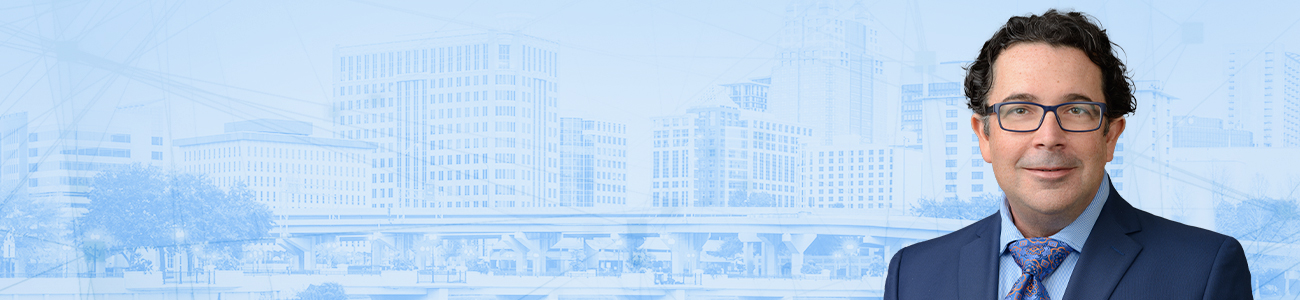



By: John Guidry
“Believe none of what you hear, and half of what you see.” I think that was Benjamin Franklin, and if he were a defense attorney in Orlando today, he’d probably be shouting it from the rooftops.
Violations of Probation (VOPs) are notoriously easy for the State to prove, but they still have to play by the rules. One of the biggest rules? A violation cannot be based solely on hearsay.
Now, hearsay is a massive legal concept—there are entire books written on it that would bore you to tears by Chapter 1. But for our purposes, it’s simple: hearsay is when a witness in court quotes someone who isn’t in court to prove that what they said is true. In plain English: “Someone told me the defendant did something.” You’d be surprised how many judges and prosecutors still try to use this “blabbing” to put people behind bars.
Facing a VOP based on a probation officer’s “hearsay” report? Don’t let a second-hand story end your freedom. Call John Guidry today at (407) 423-1117.
The case of Mullins v. State, 150 So. 3d 1243 (Fla. 2d DCA 2014) (often cited as 2015 Fla. App. LEXIS 13553) is a textbook example of why the hearsay rule matters.
At the hearing, the only evidence the prosecutor presented was the probation officer repeating what the homeowner said. That is the definition of hearsay. While hearsay is allowed in a VOP hearing, it cannot be the only evidence used to find you guilty.
The judge found Mullins guilty anyway, but the appellate court swept in and struck those violations down. Why? Because the State failed to bring the actual homeowner into court to testify. The officer’s testimony was “insufficient” because it lacked non-hearsay corroboration.
As of 2024 and 2025, Florida courts (like the Fifth DCA serving Orange and Seminole County) have continued to uphold this standard. You cannot lose your liberty just because a probation officer “blabbed” about a conversation they had with a neighbor or a landlord.
The justice system is harsh, and it’s “insane” to think that a judge would throw a man in jail based on a second-hand story. I’ve been defending the people of Orange, Seminole, Osceola, Lake, Brevard, and Volusia County since 1993. I know the “typical script” prosecutors use to cut corners, and I know how to stop them.
If your probation officer is trying to convict you with “hearsay bullshit,” give me a call. Let’s make sure the State is forced to prove their case the right way—with actual evidence.
Facing a VOP? Call John at (407) 423-1117.
About John Guidry II
John Guidry II is a seasoned criminal defense attorney and founder of the Law Firm of John P. Guidry II, P.A., located in downtown Orlando next to the Orange County Courthouse, where he has practiced for over 30 years. With more than three decades of experience defending clients throughout Central Florida since 1993, Guidry has successfully defended thousands of cases in Orange, Seminole, Osceola, Brevard, Lake, and Volusia counties. He has built a reputation for his strategic approach to criminal defense, focusing on pretrial motions and case dismissals rather than jury trials.
Guidry earned both his Juris Doctorate and Master of Business Administration from St. Louis University in 1993. He is a member of the Florida Bar and the Florida Association of Criminal Defense Lawyers. His practice encompasses the full spectrum of Florida state criminal charges, with a particular emphasis on achieving favorable outcomes through thorough pretrial preparation and motion practice.
Beyond the courtroom, Guidry is a prolific legal educator who has authored over 400 articles on criminal defense topics. He shares his legal expertise through his popular YouTube channel, Instagram, and TikTok accounts, where he has built a substantial following of people eager to learn about the law. His educational content breaks down complex legal concepts into accessible information for the general public.
When not practicing law, Guidry enjoys tennis and pickleball, and loves to travel. Drawing from his background as a former recording studio owner and music video producer in the Orlando area, he brings a creative perspective to his legal practice and continues to apply his passion for video production to his educational content.